
Quiet Voices, Noisy World
Lessons for LA from East Texas’ Black photographers and archivists

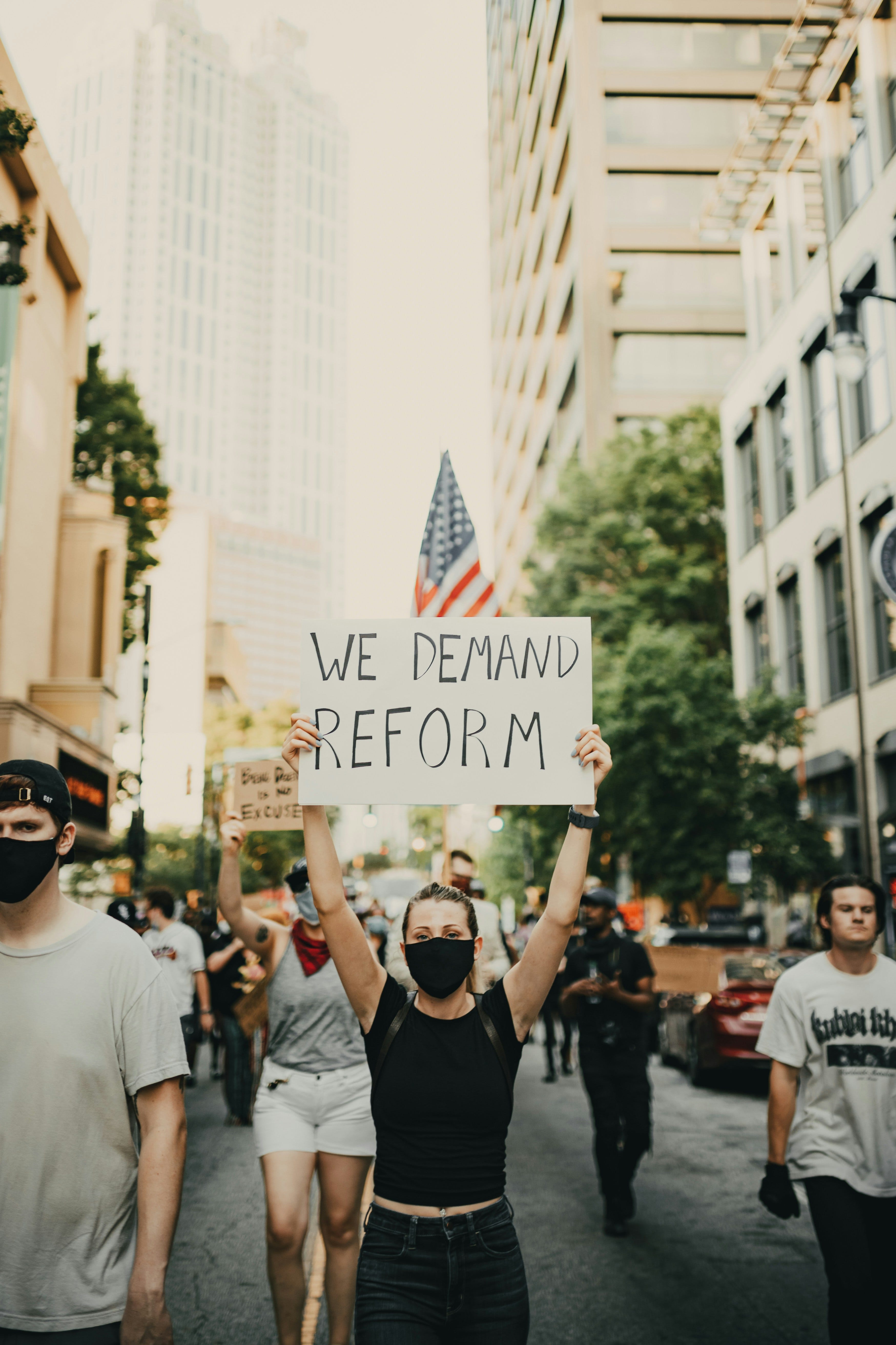
Cancel me if you must: I cannot stand contemporary protest photography. I understand its function as a memento of our discontent with the oppressive conditions of our U.S. empire, but it has become obfuscated and coarsened into bromidic chants and elementary-grade Halloween costumes. I instead learn more about this specific epoch through photos of teens at punk shows, Saturday morning volunteers tending to a community garden…images of people who show up to something with dedication, every day.
I wonder why so many of these vernacular-based photographers I meet while partying or gardening don’t try to go viral on Instagram. I think that they’re too busy…like, actually busy, as students, workers, parents, and caretakers. My favorite image makers may not even want to be discovered in that way; there’s a growing number of self-taught photographers who pick up the skill because they simply want to contribute to a larger archive that represents a neighborhood more than any other commercial work can.
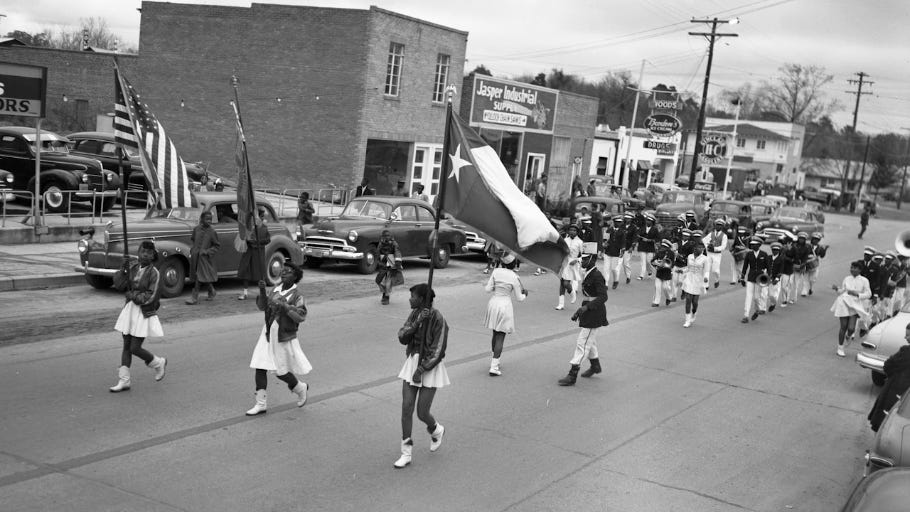
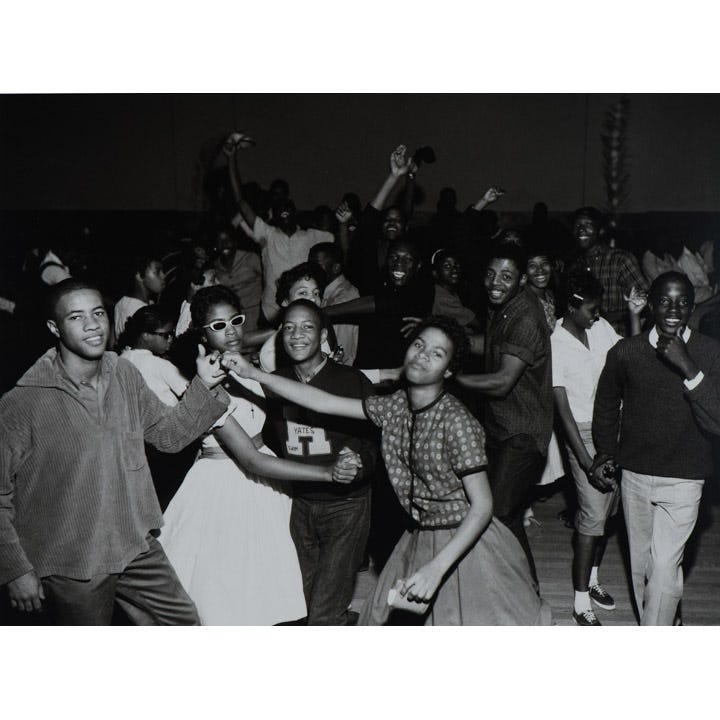
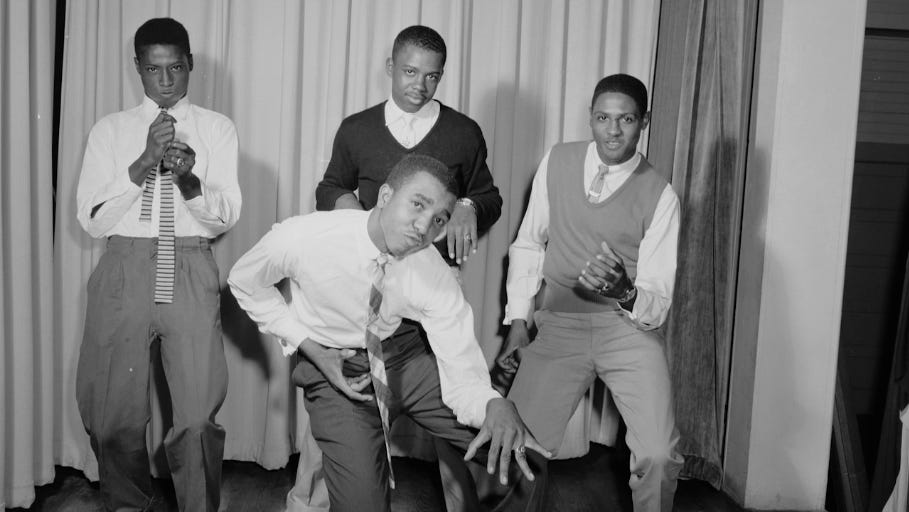
But after such a collection, what comes after? Alan Govenar has thoughts. Founded in 1995 by Alan and artist Kaleta Doolin, the Archive provides a broad overview of African American photography in rural and urban areas of Texas, spanning the period from the 1870s to the present and representing a variety of processes and makers. Featuring studio portraits, school photos, parades, protests and other gatherings, it consists of over 60,000 images and more than 20 oral histories collected from African American photographers.
Based in Texas, Alan also spent years on his latest documentary Quiet Voices in a Noisy World: The Struggle for Change in Jasper, Texas, which follows a Black community in Jasper building their public memory years after the lynching of resident James Byrd Jr. in 1998. A collective effort spanning over 20 years, the town has gone on to build museums, markers, and a memorial together. Through this endeavor, Jasper residents became part of a collaborative and participatory process where they identified and agreed on the mementos that affirm their collective identity and build self-esteem.
“I think that [this film] transcends the Jasper community,” Govenar said in our conversation about Quiet Voices in a Noisy World. I agree. I look at Jasper’s memory-making as a model for Los Angeles, a city constantly being narrativized by boosters, in need of anchors determined by its longtime residents.
Jasper’s community archive is a story about taking photos not for the urgency and vitality of a moment, but to honor the everyday. This is not only functional but also interpretive, for the current everyday feels untenable when evaluated only through “big moments.” Only when we look at it daily, with discipline and commitment, do we see that our shared legacies are in the weddings we still plan, the Saturdays we still spend watering native plants, the evenings we still reserve for prayer, and the barber we still go to—since childhood—in spite of the noise. These are the photos that remind us: what is there to do but keep on living?
I spoke to Alan about the importance of vernacular-based photography and what insights he gained from helping communities mobilize around the creation of their own public memory.
Lisa Kwon: How did your work on Living Texas Blues transition into your time in Jasper documenting Black community photography?
Alan Govenar: In the process of doing research [for Living Texas Blues, commissioned by the Dallas Museum of Art], I spoke to two curators from major institutions who were compiling a two-volume history of Texas photography at the time. They said that within their charge, they could only focus on photographers whose work was in existing collections. They could find no African-American photographers in existing collections. That shocked me. In the end, I think there were probably some Black photographers in museum and library collections, but they were not identified as such. So, in 1984, I began tracking down Black photographers who had worked in the state. I was building on the work of Deborah Willis and other Black art historians who were beginning to document Black photography in the United States. In 1985, I founded the non-profit Documentary Arts to catalyze a wide range of publications, exhibitions, and public programs.
One of the photographers I met at that time was Benny Joseph, and through Benny, I met many other Black photographers, particularly in Houston. I learned about A. C. Teal, who was in many ways the patriarch of Black photographers in Texas. Teal was originally from East Texas, and he opened his first studio in Houston in 1910. He and his wife, Eleanor Teal, started the Teal School for Photography in 1942. I began to track down his students and put together a committee of community leaders and people from museums. As these meetings progressed, the need for an independent archive became apparent, which I founded with artist Kaleta Doolin 1995.
With more than three years of funding from the National Archives, Documentary Arts was able to expand the scope of work focused on Black photographers in Texas. During the last phase of funding, we developed an internship program with historically Black colleges in East Texas — Jarvis Christian College, Texas College, and Wiley College. At Wiley College I worked with Professor Lloyd Thompson, whose wife, Bertha, was from Jasper and was friends with Helen Jordan, the widow of photographer Alonzo Jordan, whose studio in his barber shop was nearly destroyed in a storm. In 1996, Mrs. Jordan gifted her husband’s collection to the Texas African American Photography Archive.
It’s critical that these communities should be involved in their preservation. I think about my Living Texas Blues project, which in part focused on the move of people from Texas who went to California in the 1930s, and to the number of Texas blues musicians who left Texas during the World War II years looking for better work. They became the lifeblood of the south side of Los Angeles prior to the riots. After the Rodney King riots, that community was sadly destroyed further. The visual memory of what was there is spotty.
-Alan Govenar
LK: What do you think a community photographer sees that a commercial or professionally trained photographer cannot?
AG: That’s a complicated question. The fact is that it just varies. It has to be very contextualized. My new feature film, “Quiet Voices in a Noisy World: The Struggle for Change in Jasper, Texas,” in part focuses on the photographs of Alonzo Jordan and the ways photography can bolster community self-esteem. Jordan was a barber, who was essentially a self-taught photographer. He was a consummate community worker, an elder in the church who taught Sunday school.
Part of the reason I think that a lot of photographers like Jordan weren’t taken seriously by mainstream photographic curators was that they did service photography for their community. What’s often left out of that dialogue is that some of them also aspired to be artists, so they were also doing interpretive work, not just factual and documentary. There’s the image, but then there’s the meaning and the context of the image that has to be considered to fully understand it.

LK: While covering Alonzo’s photography in Jasper, your film also touches on the politics of erasure and the power behind controlling public memory. Can you say more about the subversive ways that power is wrested away from the hands of community members?
AG: That’s one of the big concerns that we have as Documentary Arts. I founded [Documentary Arts] in 1985 with the mission to advance and create new perspectives on historical issues and diverse cultures. Everything is project-driven, and we’ve put a high premium on the importance of cultural equity. Given what I experienced that led me into the world of collecting African-American photography, the issue of ethics is critically important because as archives are being built, which in many ways preserve public memory, they have to stay connected to the communities that they are from.
It’s critical that these communities should be involved in their preservation. This has happened in Jasper, but it’s taken a long time. I think about my Living Texas Blues project, which in part focused on the move of people from Texas beginning with the great musician, T-Bone Walker, who went to California in the 1930s, and to the number of Texas blues musicians and African Americans who left Texas during the World War II years looking for better work. They became the lifeblood of the south side of Los Angeles prior to the riots. After the Rodney King riots, that community, which had been in some ways declining, was sadly destroyed further. The visual memory of what was there is spotty.
…there are those that learn photography because they just wanted to make pictures, so one has to be careful to not fall into the trap of hierarchy that can exist within a community. It’s difficult because the technical skills of these photographers were challenged and limited, but one has to appreciate the integrity of the image.
-Alan Govenar
LK: You mention that it took a long time to get Jasper to build its foundation in preservation and community-centered archives. What is it that requires the most time?
AG: Engaging people in a way in which they want to be engaged. A lot of the people that I interviewed were ones who avoided the press after the lynching of James Byrd Jr. In the movie, people talk about how they didn’t want to be out front of this. They’ve lived this reality. They’re still living this reality. I think it’s a gradual process.
Small towns and neighborhood communities like Jasper built infrastructure on their own, and that’s what made it work. Coming in from the outside can be helpful, but it needs to be seen in balance. One has to respect the people that the archive is about.
In March 2026, Documentary Arts organized the Texas premiere of “Quiet Voices in a Noisy World” in Jasper and also presented the community service-driven Lone Star Youth Council in Jasper a digital archive of more than 6,000 photographs of Alonzo Jordan that we have preserved and have featured in books, exhibitions, and public programs.
LK: What are possible pitfalls that you see now that there are more communities mobilizing around the creation of their own public memory and preservation work?
AG: I think that collaboration is essential. People in communities need to be able to communicate with people outside of their communities. There needs to be a dialogue because there’s no real training that exists for how to become a community advocate, an activist, or an organizer. Organizing has to happen from within, but it also needs to be aided by people who are not part of that community because it’s important to be able to focus on what’s there and bring it to a larger public dialogue. The pitfall is that it’s a delicate balance, and it can tip one way or the other. It needs to be constantly reexamined and reassessed. It’s not an absolute.
LK: In regards to archival work, what is something we should remind ourselves when things start to feel overwhelming or urgent?
AG: One has to work with what’s there, and one has to understand that the process of public memory is imperfect. We can only create, at best, an archive that can become comprehensive like the Texas African American Photography Archive. It is by no means definitive. It’s representative of the cultural processes, the way in which these photographers interconnected with one another through the traditions of mentorship and connoisseurship.
Then there are those that learn photography because they just wanted to make pictures, so one has to be careful to not fall into the trap of hierarchy that can exist within a community. It’s difficult because the technical skills of these photographers, many of whom were self-taught, were challenged and limited, but one has to appreciate the integrity of the image. Vernacular-based photography has [thus] become more accepted within the photographic canon.
LK: I’m curious about your own lifelong work as an archivist. How do you know when a project is done?
AG: First of all, I am not a trained archivist. I have a doctorate in the arts and humanities, and a lot of my work is focused on the interplay between art and ideas. I’m also an artist. I’m a photographer. I’m a filmmaker. I work in musical theater. For me, projects are ongoing. There are different threads in my work. I’ve published more than 40 books. I have more than two dozen movies streaming on Amazon Prime. I’ve written three off-Broadway musicals. I have a new production of a musical called Texas in Paris that’s going to have a 12-week run at Signature Theater in New York from January to March 2027. I also have published a couple of novels.
While some of my projects span discrete blocks of time, many are ongoing. The scope of research and documentation on African American photography, started more than 40 years ago, has evolved and takes different forms, whether in publications, films, or new strategies for community advocacy and engagement.
I’ve had a freeform career, but it all connects through what I’m trying to express. The subject matter determines the medium of expression, and the feeling of completion is not a sense of finality. It’s a sense of continuation as I find out new information or I see a different reality. One of the great joys of my life is making art and documentary work. That has gone well, and it’s ongoing.
Visit “Kinship & Community: Selections from the Texas African American Photography Archive,” curated by Nicole R. Fleetwood and co-presented by the California African American Museum and Art + Practice. It is available to view at Art + Practice now through September 5, 2026.